Men did not love Rome because she was great. She was great because they had loved her.” - G.K. Chesterton
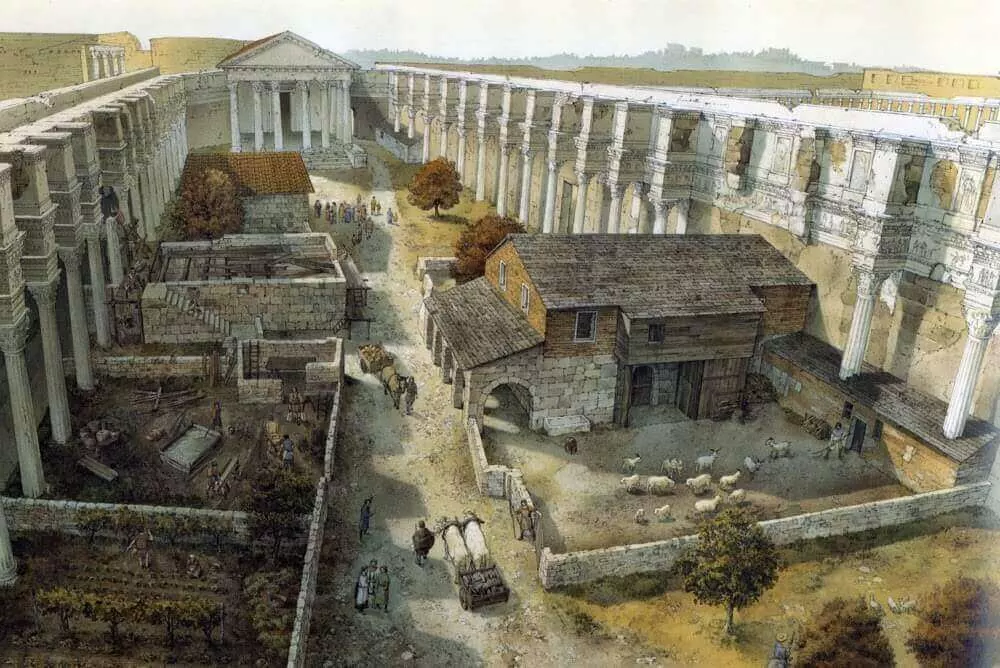
The exact date of the fall of Rome is ill-defined. After the Eastern Orthodox split from the West, the city of Rome fell in 476 with the deposition of its last emperor at the hands of Germanic tribes, while Constantinople would continue to stand for nearly another millennium. The lands of Rome on the Iberian Peninsula were resettled by its conquerors. Slowly, their memory faded, and the city was deserted. The Forum of Nerva became a campo vaccino, a cattle field, while the Colosseum became a graveyard and was used for rental housing. These subsistence farmers lived among the ruins of a greater society, one whose monuments they themselves could neither understand nor construct.
“Nobody spends somebody else’s money as carefully as he spends his own. Nobody uses somebody else’s resources as carefully as he uses his own. So if you want efficiency and effectiveness, if you want knowledge to be properly utilized, you have to do it through the means of private property.” - Milton Friedman
visions of empire
I used to think economics was just the practical medium of action through which cultural norms and beliefs could be enforced, which, in the West, takes the form of free markets. This is due to having spent little time considering it deeply and dismissing any specific framework as just an implementation of how wealth can be distributed.
Preference for economic systems largely comes down to what you believe society should achieve. If the goal is to ensure an equal standard of living for its population (speaking theoretically), Communism is the most direct way to achieve that goal. My gripe with communism, beyond praxis, is that I simply don’t agree with its stated chief aim of equality among all the proletariat. I believe in a compassionate, egalitarian world, without equal outcomes, a world where someone can become anything. America, for all its flaws, remains the most successful society ever built for that purpose. 70% of new billionaires in 2025 are self-made, rather than scions of existing empires.
I was formerly apathetic about capitalism, but that has gradually changed. My thoughts have landed on the following three points:
- Capitalism enhances human progress by generously rewarding individuals if they are one of two things: 1) singularly gifted at what they do, or 2) a first-mover contrarian. Then conversely, if you do only normal things with the life you are given, you will have a normal outcome. It is necessary to overcome natural human risk tolerance by providing exceptionally strong incentives in a situation where 95% of people will necessarily fail, while the remaining 5% will redefine society. Venture capital really does have the potential to change the world via moonshot ideas. Of course, this is only when done outside a circular economic system, like corporate services being sold repeatedly between companies–this misalignment between what benefits society, and what enriches individuals in the system, is a different problem.
- Labour does not have value in and of itself. One can spend 80 hours working on an utterly pointless project without meaning to anyone but the creator–that does not mean they are entitled to 80 hours of someone else’s useful labour. Take an example: suppose there is a wizard who, with one lazy wave of his staff, can conjure up food sufficient to feed a town of 50,000 people. On the other hand, consider a wheat farm employing 1000 workers, who break their backs from sunrise to sundown every day plowing, seeding, watering, grinding, sieving, and moving, to produce an equivalent amount of flour. Socialists state that the labour from the latter means that the collective farm must be compensated at a rate commensurate with 1000x that of the wizard. In fact, I think society should probably reward the wizard more, as he produces equivalent output at a fraction of the overall cost. The market will reallocate the displaced labour toward more productive ends. This inequality, driven by differences in efficiency, is an exciting feature and not a flaw.
- Markets are beautiful in their organization and self-correction, especially in the emergent phenomena that markets understand any subject better than any individual actor. It’s a very elegant exercise to perform, distilling preferences and signals into clear, objective numbers through the distributed cold guidance of harnessed human greed. The fullness of every Walmart parking lot over a quarter is priced in. Every leaf that drifts from a leafy canopy to come to rest on a forest floor is priced in. Every sip taken from a water bottle, the blinking of an eye, the twitch of a finger, it is all priced in. It is the closest thing humans have to omnipotence.
While capitalism is the most effective economic system in rewarding efficiency and individual excellence, I do have qualms with the fact that risk and progress do not perfectly correlate with wealth. Those who exercise control over the system do not themselves have skin in the game and, if they make the wrong decisions, they are insulated from the consequences by bailouts and loopholes, meaning that the risk-takers take on little personal risk. While capital distribution is a valuable skill, it should be possible to punish people who impact the lives of thousands with their poor decisions. This is made worse because modern elites, unlike the aristocratic ruling class, do not believe that they have a duty to the common people, as the lords and barons of old did. It used to be that you would pay taxes to a feudal lord, who in turn would employ security who would keep the peasants within their fiefdom safe. In contrast, (some of) the parasitic elites of nowadays offer very little to the people they profit from in return. I want the rich to have skin in the game they oversee.
(Canada is a cautionary tale of what happens when a country slips further from neoliberalism. It’s a structural inevitability of the middle-income trap that governments suggest imposing an additional task on young people fleeing the country you’ve put in permanent stagnation. It’s then clear why so many of our best and brightest leave for environments with higher EV. At this point, I don’t believe there is a feasible path to reverse this trend. Canada functions by propping up less productive citizens for as long as possible, using the gains provided by the most productive, whom they try to keep as long as possible before they inevitably flee. Naturally, an economic system that more strongly supports equal outcomes will attract underperformers who gain more than they pay, while disincentivizing top performers from staying. The US has never needed to build a fence to keep its capitalist citizens in; you are free to leave at any time–it’s telling that instead, millions of people illegally sneak in.)
the new social contract
The dilemma we face can be summed up by this 1960s poster during demonstrations against the Apollo mission. I for one was unaware that there were anti-Apollo protests.
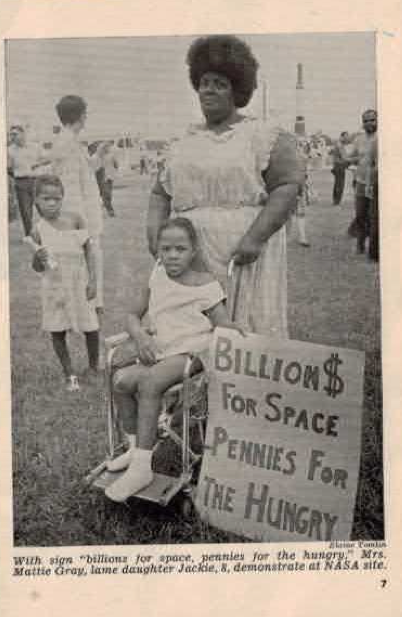
How hungry are the hungry, and how many billions can we dedicate to space? What distribution of limited resources should we aim for, and through which mechanisms should worthiness be evaluated by?
A socioeconomic hierarchy is a natural outcome of differences in circumstances and ability in a country; no society in human history has successfully dismantled one (ironically, the ones that try the hardest to do so have some of the most oppressive of such systems). We should enable the fluid movement into higher classes, enabled by personal grit and effort.
This is easy to say in principle, but it is obviously a difficult task to accomplish. To change our society such that we can accomplish this, we first need to understand a breakdown of the society in which we live, and what the everyday person does. It can be difficult in our social bubble to get a grasp of what the median voter/citizen is like when everyone around us wants to work in tech, law or medicine. karpathy.ai/jobs breaks down occupations across the US by sector size.
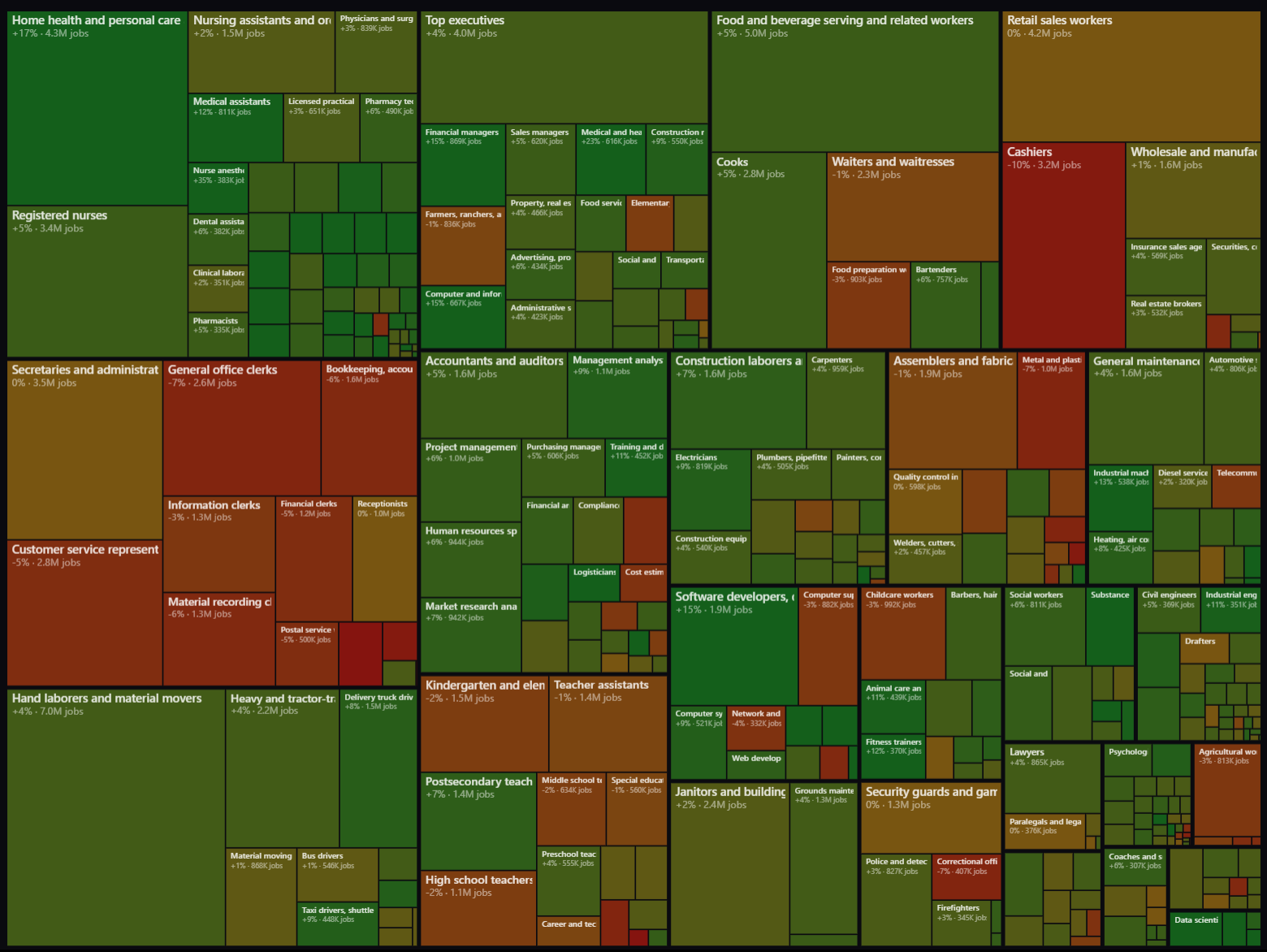
The majority of humans, not suited to abstract intellectual work, would not thrive in a society trending towards the importance of knowledge work. Because the historical trend has always been an increase in the number of knowledge workers as the amount of physical labour required to gather resources for survival decreases, a snapshot of the present day has the highest proportion of knowledge workers in history (90% of medieval Europe was feudal subsistence farmers). If this is the distribution of jobs in the world’s most advanced economy in 2025, it’s safe to say that historically, there can only have been fewer knowledge worker jobs. Of course, some of these people are taking on part-time work to make ends meet and are therefore working below their means, but it is so unlikely that everyone is doing so.
In fact, even if we had an overabundance of people who can perform knowledge work, we don’t have the economic surplus to fund such a number of white-collar positions. These are the occupations that are necessary at all times to keep the country functioning. If we consider the fact that the number of adults with bachelor’s degrees is approaching 50%, some people will inevitably be sorely disappointed when they become baristas. A downwardly mobile generation of elite aspirants who fail are going to demand change in the system, which explains the rising popularity of socialism. Socialism delivers, if nothing else, cathartic schadenfreude at the expense of those classified as elites. This is another point worth considering: how to manage societies to limit the number of elite aspirants.
I believe in contributing more of public resources to supporting people who do extraordinary things (expanding research grants, scrapping No Child Left Behind, etc.); it’s important to maintain a baseline for human health, but the country also needs to face the reality that essentially only the top quintile will contribute towards forwards progress for the country, while the rest are simply necessary for keeping things running. I would like to see a society where people at the bottom of any hierarchy are sufficiently satisfied. At the same time, we divert the remaining resources to advancing the human race’s abilities and ensuring that everyone has the chance to reach the top.
In any proposed wealth distribution, there will always be people who feel like they are being taken advantage of by the system. (This is not exclusive to societies under capitalism or aristocracy: In Cuba, a cab driver often earns significantly more in a single day than a state-employed doctor makes in an entire month.) The Tocqueville Paradox further exacerbates any societal unrest from inequality. Alexis de Tocqueville observed that as physical conditions improved across all levels of society, social dissatisfaction with material conditions grew stronger, rather than weaker, as one might expect. That is to say, the utility from improving living conditions was fully offset, and then some, by accelerating wealth inequality. This destabilizing force, which grows as society materially improves, is also a major problem and a natural limiting factor on the most skewed wealth distributions possible.
What would be the best society that fits within these constraints? I intuitively like to consider the extreme cases (process corners!). For an example of meritocracy taken to the natural extreme, we simply need to take a look at the horrific state of South Korea. When everyone strives to be part of the 1%, by definition, 99% will fall short. A citizenry without hope exacerbates the zero-sum game of socioeconomic class, simultaneously creating the hardest-working and the most miserable country on earth. This was certainly not what the architects of the system had in mind, but it is the natural local minimum.
On the other hand, take the United States. The obfuscation of the US education system is interesting to consider as an alternative to a Red Queen’s Race, but it is arguably just as bad a solution. The high variance in university admissions is by design–it avoids potential gamification of the system (Goodharting) by sufficiently obscuring internal mechanisms, while shielding decisions made behind reasonable doubt. To illustrate my point, if Tsinghua were to announce tomorrow that, starting in the 2026 admissions cycle, they would require a “well-roundedness score,” millions of Chinese families from every socioeconomic class would uproariously demand new after-school “fun” tutors, whose work consists of teaching a kid a new sport or basketweaving or something equally pointless. Elite overproduction makes everyone in the rat race miserable, even the winners.
Of course, the downside of obfuscation is the inevitable unfair outcomes it produces. It will inevitably leave people upset when they see those objectively less qualified, less hard-working, achieve better outcomes than they do. In America today, this plays out across every selection process of someone’s life, from admissions to preferential treatment in job interviews, which naturally seems unfair. Affirmative action is also another playing field of the ingroup advocacy discussed earlier. Everyone clamours for a meritocratic society until they find that said society doesn’t put them on top. Then, anyone would backpedal and start advocating for a society with equal outcomes, under a newly adopted banner of fairness and equity in outcomes. In this way, it also generates resentment between advantaged and disadvantaged groups.
Additionally, the implementation of the tenets of DEI, such as providing preferential treatment in hiring or admissions, carries an implicit message that minorities cannot compete on an equal footing, which contradicts liberalism’s foundational premise of equality. Since DEI initiatives elevate candidates who would not otherwise have been selected, then statistically speaking, targeted minorities would in fact be less competent at their jobs in the aggregate, reinforcing the relevant stereotypes that they seek to alleviate the effects of.
Victor Glover must be pretty fed up with being treated any differently from the other astronauts because of his race. I admire people like Scott Bessent and Tim Cook; there is no point in viewing their accomplishments through the lens of sexuality, nor is there any question that they were hired based on affirmative action. I think DEI is a driving factor in holding us back from a post-racial society in the West, where we are truly blind to race, sex, and creed.
I don’t want to live in a feudal system where your life path is determined based entirely on pure competition, a race for the top. Yet I also don’t want to go so far on the other extreme that we think the reason we observe any inequality in outcomes is prejudice, and that we need to spend trillions of dollars to equalize said outcomes.
the malleability of nations
Expectations of immigration up to the late 20th century continued to emphasize welcoming the weary, who were expected to assimilate and contribute. While North American immigration before the 21st century was undoubtedly openly racist and unmeritocratic, each successive wave of immigration came primarily from people who desired to assimilate into the native population and who were fiercely loyal to the new land that accepted them. Roosevelt famously declared in 1919 that “we have room for but one sole loyalty, and that is a loyalty to the American people.” (It’s amusing to note his equivalent “a man who loves other countries as much as his own stands on a level with the man who loves other women as much as his own wife”.) It’s difficult to agree that today’s America demonstrates the principles Roosevelt advocated for. What changed between then and the present to shape immigration norms and cultural consensus into what they are in the present?
I believe that this trend we see in the West of uncontrolled and deregulated immigration is intended to disarm Western nations and prevent another great conflict. By making every country a melting pot and minimizing the expectation of assimilation into a host country’s culture, national identity is weakened.
This trend, which we consistently see across almost all Western/NATO countries, is the realization of the dreams of post-WWII leaders. Western governments must have concluded that the horrible devastation caused by ethnic tension in Europe is not compatible with the increasing potential of any country to inflict large-scale suffering on its neighbours with refined industrial weapons. As Jean Monnet, the architect of European postwar reconstruction plans, puts it,
“There will be no peace in Europe if the States rebuild themselves on the basis of national sovereignty, with its implications of prestige politics and economic protection… The countries of Europe are not strong enough individually to be able to guarantee prosperity and social development for their peoples. The States of Europe must therefore form a federation or a European entity that would make them into a common economic unit.”
To complement these goals, leaders gradually pushed increasingly progressive messaging about equality and fraternity, such that even tangentially related variations are taboo. Then, unassimilated immigration is another means of increasing ties between countries and homogenizing them, such that their national identities are supplemented with foreign cultures; moreover, this behaviour is embraced and accelerated by more welcoming societies.
As people lose their national, racial, and religious identities, they gravitate towards alternative social structures as alternative sources for group belonging, which were previously rarely seen. These surrogate identities are often detrimental to themselves and society. For instance, national consciousness can become supplanted by class consciousness, which enhances divisions in society by defining and alienating a specific group. In general, because of these cultural shifts, conditions are such that national pride is unlikely to arise again due to changing social factors.
There are significant upsides to these policies, the greatest being that we will never see a war between the Western Great Powers ever again. Even if Europe had not each been scarred and significantly diminished militarily by the previous two World Wars, it seems laughable to suggest that, say, Germany (with 30% of its population being foreign-born immigrants, many from Africa) will ever initiate a war of expansion/conquest. With diaspora from every country in another, it becomes increasingly difficult to justify a war with another nation when a significant portion of your own country has, in the best case, secondary loyalty to another country (for example, take the Malay Chinese population). A fragmented Europe cannot define a motherland, much less one worth defending.
An important question to ask then is how this societal change might be necessarily harmful. What are the tradeoffs we make when we gut nationalism for the sake of extending a long peace? If we reject the universal supremacy of one race over another, it makes sense for people from all over the globe to enjoy the fruits of wealth and help together contribute to a better post-racial nation. However, this fails to consider the negative social impacts of a more diverse society upon all of its constituents.
First, it distorts justice. A jury-based liberal democracy only functions properly if its citizens are willing to educate themselves and make rational decisions. In a racial society, we continually observe people going to vote for their social in-group. There is nothing necessarily “racist” about this–citizens want to elect those whom they see as a more admirable, more polished, less crass version of themselves. However, the more diverse that society becomes, it becomes less and less likely that a jury of one’s own peers delivers justice, and merely becomes an actuator of racial tensions.
We observe that voters are selfish actors. This behaviour will lead the electorate not to act in the interests of the country at large, but according to their own interests. It’s no secret that pandering to every ethnic festival and vigorously promising free things to people of interest groups gets votes. This is why every election cycle, we see Pierre Pollivere celebrating Chinese New Year, or Trudeau at some Sikh Festival, or other equally silly events. This makes no sense. I’m sure the people doing the pandering are acutely aware of how disingenuous they are, but the slight disapproval or apathy from 90% of the electorate is worth the sudden boost with the 10% in-group. Nate Erskine-Smith, who for years has advocated for mass immigration and pandered to the Bengali community in the riding, lost to a man who doesn’t even live in the neighbourhood, who handed out pamphlets in Tamil showing how to vote.
This system, unlike the free market, creates a negative-incentive problem. Instead of benefiting society, advocating according to human nature (individualism and greed) actively makes the country a worse place via accelerated fragmentation. The dream of democracy can only be realized in high-trust societies, with faith in institutions and the common man. When people from low-trust societies organized in different ways arrive in our country and do not assimilate, we get a mix of fractionalized interest groups that treat the state and public resources like a carcass to be picked clean.
Indeed, it’s clear that immigration and the welfare state cannot coexist, due to inevitable rent-seeking from those without civic duty. Instead, society will collapse inwards, as people decrease the radius of the social circle in which they have an emotional stake. A duty to only family and friends replaces the duty to the nation and community. A Harvard study found that civil unity and duty to the community fell in more diverse neighbourhoods. This has real consequences: as this civic duty degrades and as isolated bubbles form, we lose the sense of connection we feel to all our countrymen. It also becomes nearly impossible to create any projects that span more than a generation. National, religious, and racial unity is degraded; each generation fails to find a sense of connection or duty (and therefore responsibility) with the faceless, nameless successive generations that follow.
A problem with more immediate consequences arising from weakened nationalism is the self-inflicted diminishment of the strength to survive and fend off challenges from adversaries. Increasing the diversity of one’s own country is a self-damaging behaviour that contradicts game theory, since it unilaterally weakens one’s relative strength. If all countries in the world were undergoing a similar diversification, we could draw parallels with nuclear disarmament treaties, where countries mutually agreed to lose the potential to inflict damage on each other. However, such a world is not the one we live in; only the West is undergoing a demographic transformation, while these Liberal beliefs are not accepted elsewhere in the world. China actively ridicules American diversity proposals and sees it as an unnecessary social risk. With the growing geopolitical tensions of the 21st century, if such a world where the Long Peace ended were to come to pass, the West presents little willpower for its own defence. Consider a nation like China: it seems obvious that such a nation, one with cultural unity and national pride, as well as a distinct lack of shame for the past, would have no problem convincing its people that the idea, people, and lands of China are a place worth dying for. Would the same hold here in the West?
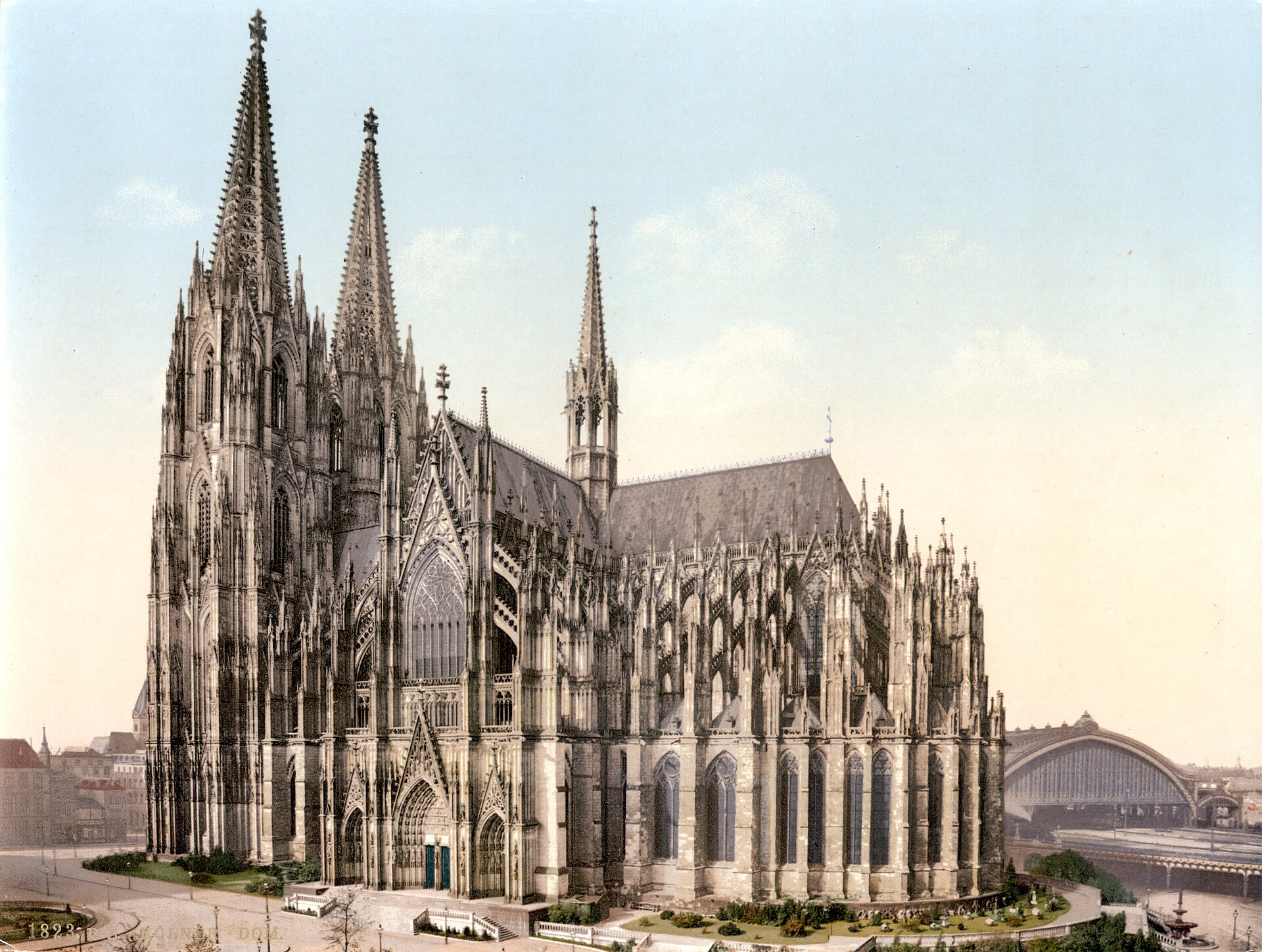
The Cologne Cathedral was completed over six hundred years of collective dedication and the honouring of a belief that transcended over a dozen generations. What shared beliefs can the modern man find in common with those of a man of a mere hundred years ago? Our society has hobbled itself to the point where it can no longer build such testaments of love, justice, and inspiration for our descendants. We will be condemned, like the descendants of the Romans before us, to live in a society where the motivation that drove them to create their greatest works is incomprehensible to us, and to witness the slow enshittification and degradation of all public spaces as people retreat into their own enclaves. Art imitates life, and the increasing depiction of mediocrity in art is a sign of a country in moral decline.

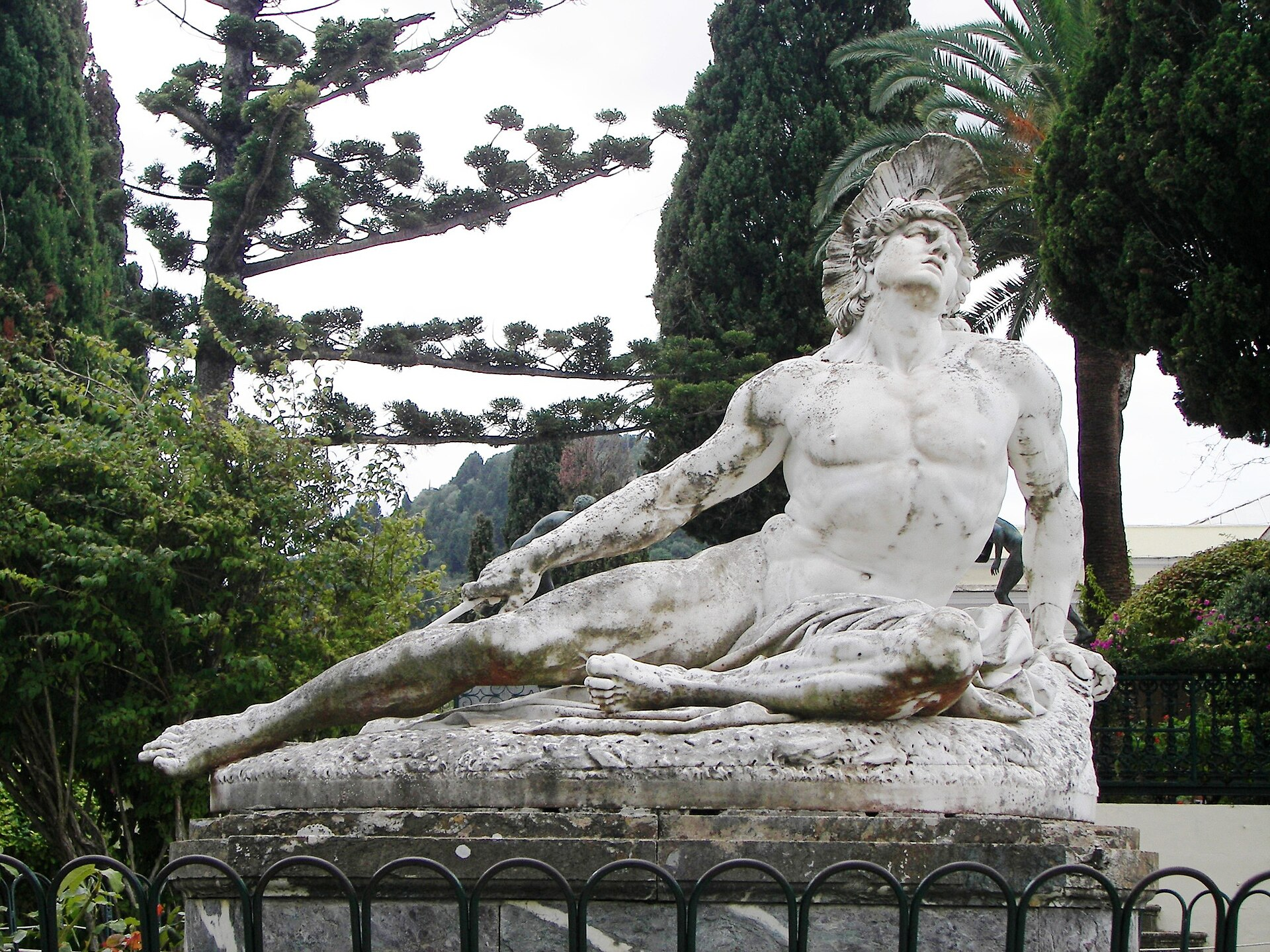
The uninspired state of today’s buildings and monuments cannot all be blamed on cultural dissonance. Another major downside of capitalism is that it fails to recognize labour with little present economic value; a datacenter is more profitable than a cathedral, so the former is much more desirable to build. However, this is not a problem inherent to capitalism as a system, but rather a problem caused by the lack of correct incentives and short-term thinking. Fiat currency causes a high time preference, so things need to be built fast, cheaply, and of low quality, due to inflation. A building’s economic value a century after use is often neglected during construction. The grand historical buildings seen in Europe were all built in economies based on non-inflationary currencies (e.g., gold), where investing in quality was incentivized. Additionally, of course, these people believed in pursuing a purpose greater than themselves.
Indeed, here lies the core problem with capitalism: in optimizing capital flow and growth, it impersonalizes transactions and diminishes the importance of long-term thinking. The great barons Vanderbilt, Carnegie, and Rockefeller used their surplus to build monuments and improve society, not out of economic incentive, but rather patriotism and a sense of camaraderie with their fellow man. If we weaken these ideals, we weaken the desire for people of privilege to do good deeds as an end in and of themselves. The role of government and nationalism is to guide capital, adjusting rewards when economic systems cannot fully account for the creation of non-economic value. Realignment.
I want to live in a country where ordinary people can contribute to a mission greater than themselves, regardless of creed or race. I yearn for a vision of a land worth suffering for and devoting your life to, a land loved dearly by all of its inhabitants.
“For we in America have no interest in being polite and orderly caretakers of the West’s managed decline.” - Marco Rubio
a world worth saving
What kind of steps can we take to create a just society?
I disagree with affirmative action as a form of moral reparation, but I think that that full transparency in admissions would make things worse. Some level of obfuscation in the admissions process is needed to induce second-order effects on competition, helping to avoid the construction of the systems we see in Asia. I view it as an example of Braess’s Paradox, the observation that widening highways by adding more lanes increases instead of relieves congestion. So many people advocate for the abolishment of affirmative action, yet fail to consider the second-order effects. Since admissions is zero-sum, eliminating its obfuscation simply raises the floor of competition, resulting in precise gaming of the criteria. Everyone would need to work harder to achieve the same outcomes. Full transparency in selection would exert stronger pressure on every participant in the system, even the supposed winners. Additionally, obfuscation is a lesson delivered to every participant about what much of the real world runs on: opaque, illogical, subjective decision-making.
Society can only reward effort without an academic race to the bottom (or I suppose top) by eliminating this belief from most of its population. In other words, the only way to prevent this race is to stop people from aspiring to ever be at the top by keeping them content in a place where they are meant to be. The goal of a progressive society should not be to normalize outcomes regardless of fitness, but rather to convince people that their value lies beyond their titles and wealth.
I think the striver’s view of a successful life is woefully shallow; social status defined by what logos you are associated with is not a pleasant world in which to live. The real problem that is faced by society, which I hope has been sufficiently outlined, is a lack of greater meaning. With the rapidly falling fertility and marriage rates, increasing secularism, and the aforementioned splintering and factional communities, it’s no wonder modern people are listless and left without a sense of purpose: we have lost the shared mythos that once bound us as a nation. When we lose our group identity, individual prestige is the only thing that we cling to.
Psychologists who study well-being consistently find that some of the main factors that produce a contented life are deep, cultivated relationships, participation in meaningful work, and a sense of community (I like the PERMA-V framework). Notice especially that these factors are zero-sum, and none hinge on the winning. It might be a cliché, but people have repeatedly found that the key to a content life is being part of a community that cares deeply about one another and shares a common vision. I believe that everyone can find contentment, regardless of socioeconomic status.
When people find meaning in their communities, in people and ideals that are worth believing in and sacrificing for, they find new motivation and purpose in life. I see no nobler aspiration than to become “a learned man and a lover of his country.” The greatest works of history have been accomplished by men who laboured to plant trees for their great-grandchildren, under which they would never sit. I want the West to relearn why it once built cathedrals.

First published May 30, 2026, with ideas collected from October 2025 through May 2026.
I really enjoy giving lucid explanations of my thoughts! Please let me know if this made you feel something, or how you disagree.